
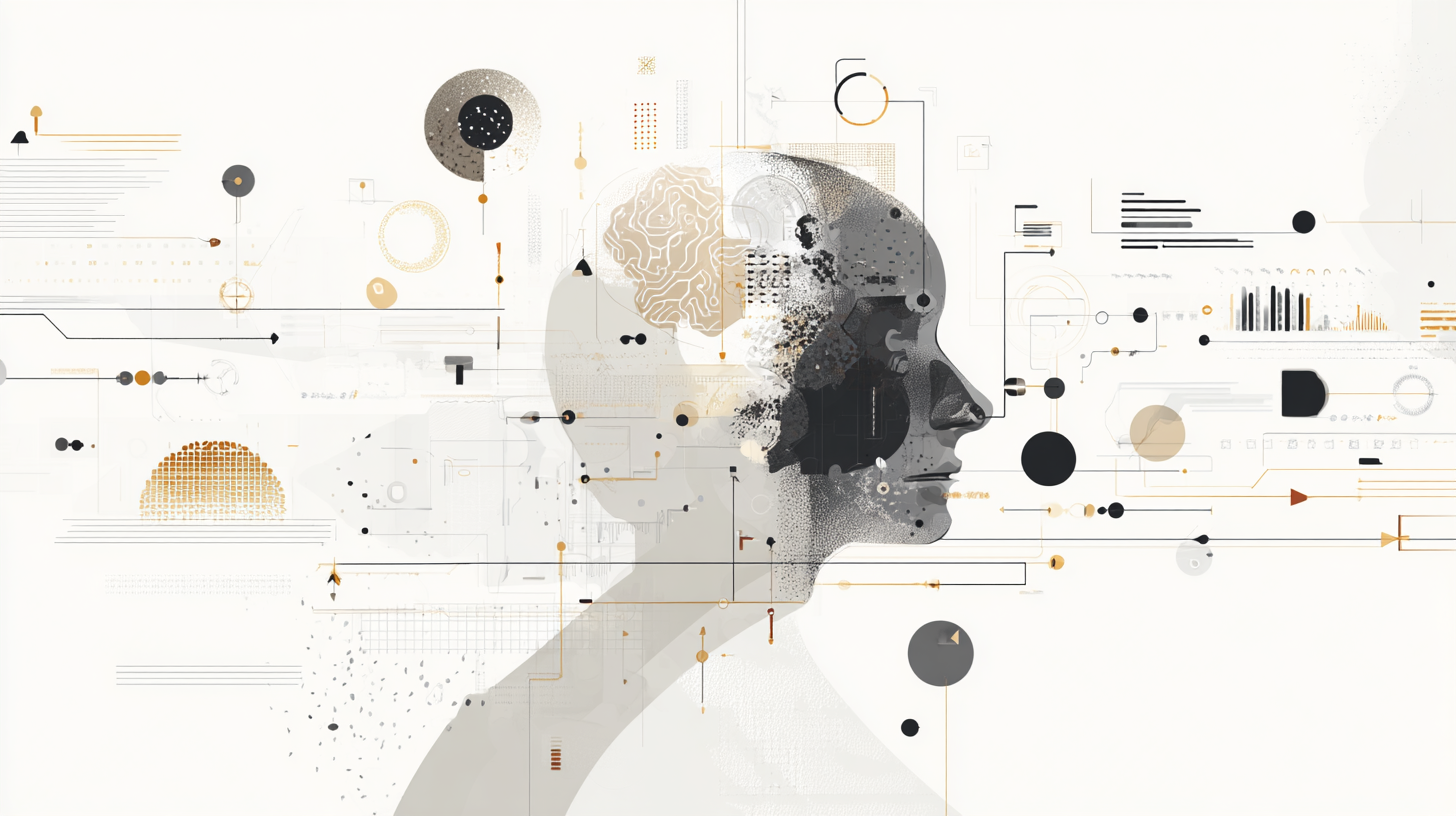
AI Can Process Data, But Only Humans Can Make Decisions That Matter
The Scene: A Fortune 500 company's AI system analyzes market data and recommends launching a new product line. The data is compelling—market size, competitor analysis, customer demand signals all point to success.
The Reality: The CEO kills the project in 30 seconds.
Why? The AI missed something crucial: the company was already overextended on three other major initiatives, the recommended launch timeline conflicted with a planned acquisition, and the CEO knew from experience that their team couldn't execute effectively on this type of product.
The Lesson: Data analysis is just the beginning. Real business decisions require human judgment, context, and wisdom that no AI can replicate.
The Irreplaceable Human Advantage
What Humans Do That AI Never Will
The irreplaceable human advantage isn't about processing speed or data analysis—it's about the uniquely human capabilities that no algorithm can replicate.
Strategic Context Understanding
AI sees individual data points and identifies patterns, but humans see the bigger picture that connects those data points to business reality.
Consider this scenario: AI analyzes market research and reports that 73% of customers want a specific new feature. The data is clear, the demand is strong, and the recommendation seems obvious: build the feature.
But a human CEO looks at the same data and sees something different. Yes, customers want the feature, but implementing it would require pulling the development team off the core product for six months. The main competitor just raised $50 million and is gaining market share rapidly. The company needs to strengthen its core offering, not get distracted by feature requests.
The AI recommendation was technically correct but strategically wrong. It optimized for customer satisfaction without considering competitive dynamics, resource constraints, or strategic timing. Only human judgment could weigh all these factors and make the right call.
Stakeholder Relationship Management
AI optimizes for metrics, but business success depends on relationships—with customers, employees, partners, and investors. These relationships require empathy, trust, and long-term thinking that AI simply cannot provide.
An AI system might recommend reducing customer support costs by 40% through automation. The numbers look compelling: lower costs, faster response times, consistent service quality. But a human leader understands that personal support is often what differentiates their company from competitors. Customers don't just want their problems solved—they want to feel valued and understood.
The human decision might be to find efficiency gains elsewhere while preserving the personal touch that builds customer loyalty. This decision might look suboptimal on a spreadsheet, but it strengthens the relationships that drive long-term business success.
Risk Assessment Beyond Probabilities
AI excels at calculating probabilities based on historical data, but humans understand consequences in ways that go beyond statistical analysis.
When AI reports an 87% probability of success for a new initiative, it's providing valuable information. But a human leader asks different questions: What happens if we're in the 13% that fails? Can we recover from that failure? What would it do to our reputation, our team morale, our investor confidence?
Sometimes the right decision is to pass on a high-probability opportunity because the consequences of failure are too severe. Sometimes it's to pursue a lower-probability opportunity because the learning value is high and the downside is manageable. These nuanced risk assessments require human judgment that considers factors no algorithm can quantify.
Ethical and Cultural Considerations
Perhaps most importantly, humans bring values and ethical considerations that AI cannot replicate. AI follows its programming and optimizes for defined objectives, but it cannot make moral judgments or consider the broader impact of business decisions.
An AI marketing system might identify that people showing signs of financial stress are more likely to convert on loan offers. From a pure optimization standpoint, targeting these vulnerable individuals makes perfect sense.
But a human leader recognizes that this approach is predatory and ultimately destructive. Building a sustainable business means helping customers make good financial decisions, not exploiting their vulnerabilities. The human override isn't just about ethics—it's about building the kind of company that attracts loyal customers and talented employees.
The Validation Gate: Where Human Judgment Shines
The Critical Moment
In traditional AI agent systems, outputs flow automatically from one agent to the next. But in human-centered orchestration, every AI output hits a validation gate—a moment where human judgment determines what happens next.
AI Output → Human Validation Gate → Decision
How Validation Gates Transform AI Analysis
The validation gate isn't just a checkpoint—it's where AI analysis becomes business wisdom. Here's how human judgment transforms raw AI insights into strategic decisions.
When Human Judgment Changes Everything
Let me show you how this works with three real examples from our platform, where specialized AI experts provide analysis that human leaders then validate and refine.
The European Expansion Decision
An AI market analysis identified a compelling opportunity: the European market showed 340% growth potential with minimal direct competition. The data was impressive—market size, growth rates, competitive landscape all pointed to a massive opportunity.
But when the CEO hit the validation gate, different questions emerged. Did the company have the resources for international expansion while still growing their North American market? What regulatory challenges might they face that weren't reflected in the market data? How would currency fluctuations affect their margins? What would international expansion do to their team's focus and execution quality?
The AI analysis was correct about the market opportunity, but human judgment revealed that the timing was wrong. The company needed to solidify their domestic position before taking on the complexity of international expansion. The CEO's decision: "The opportunity is real, but we're not ready. Let's revisit this in 18 months when we have the resources and focus to do it right."
Six months later, two competitors rushed into the European market and struggled with execution, regulatory challenges, and resource constraints. The human-validated decision to wait proved strategically sound.
The Product Development Dilemma
AI analysis of customer feedback and development complexity recommended prioritizing Feature X—it had the highest customer demand score and the lowest development complexity. From a pure optimization standpoint, it was the obvious choice.
But the product leader's validation process revealed deeper considerations. Feature X was popular because it would make the product easier to use, but it wouldn't differentiate them from competitors. In fact, it would just help them catch up to what competitors already offered. Meanwhile, Feature Y was more complex to build but would create genuine competitive advantage.
The human decision: prioritize Feature Y despite the AI recommendation. The result was a breakthrough feature that became a key differentiator and drove significant new customer acquisition.
The Marketing Message That Almost Wasn't
AI analysis of campaign performance data recommended an emotional appeal strategy targeting customer pain points. The conversion data was compelling—23% higher conversion rates compared to their current approach.
But when the marketing director hit the validation gate, she asked different questions. Was this messaging consistent with their brand values? Would this approach build long-term customer relationships or just drive short-term conversions? How would their team feel about representing this message? What kind of customers would this attract?
The human decision was to reject the high-converting approach in favor of a more authentic message that aligned with their values. The result was slightly lower conversion rates but much higher customer lifetime value and employee satisfaction.
Why Human Oversight Creates Unshakeable Trust
The validation gate system doesn't just improve decision quality—it builds the kind of trust that becomes a sustainable competitive advantage.
Transparency That Builds Confidence
When every AI recommendation goes through human validation, something powerful happens: stakeholders can see exactly how decisions are made. There's no black box, no mysterious algorithm making choices that no one can explain. Every strategic decision has a clear human owner who can walk through the reasoning, explain the trade-offs, and take responsibility for the outcomes.
This transparency creates confidence at every level. Investors trust that strategic decisions are being made thoughtfully, not just optimized by algorithms. Customers trust that their needs are being considered by humans who understand their industry and challenges. Employees trust that their expertise and judgment remain valued and essential.
Accountability That Drives Excellence
Perhaps most importantly, human validation creates clear accountability. When an AI system makes a recommendation that turns out badly, who's responsible? The algorithm? The data scientist who trained it? The executive who implemented it?
But when a human validates an AI recommendation and makes the final decision, accountability is crystal clear. That person owns the outcome, learns from the results, and applies that learning to future decisions. This accountability loop drives continuous improvement in ways that automated systems simply cannot match.
Learning That Compounds Over Time
Each validation decision becomes organizational knowledge. Teams learn what kinds of AI recommendations to trust, what questions to ask, what factors to consider. They develop pattern recognition that helps them spot potential problems before they become real issues.
This learning compounds over time, creating organizational capabilities that become increasingly difficult for competitors to replicate. It's not just about having better AI tools—it's about having better processes for using those tools effectively.
The Competitive Advantage of Getting This Right
Organizations that master human-centered AI orchestration develop advantages that go far beyond better decision-making.
Speed Without Sacrifice
Traditional approaches force you to choose between speed and quality. You can get fast answers from AI, but they might lack context or judgment. You can get thoughtful analysis from human experts, but it takes time.
Human-centered AI orchestration gives you both. AI provides rapid analysis and comprehensive insights, while human validation ensures quality and appropriateness. The result is fast decisions that are also good decisions—strategic choices that are both timely and wise.
Trust That Scales
As organizations grow, maintaining trust becomes increasingly difficult. Stakeholders worry about losing the personal touch, the human judgment, the accountability that made the company successful in the first place.
Human-centered AI orchestration solves this by scaling human judgment rather than replacing it. AI handles the analytical heavy lifting, but humans remain in control of every critical decision. Trust scales because the human element scales.
Capabilities That Compound
Perhaps most importantly, organizations that master human-AI collaboration develop capabilities that improve over time. They get better at asking AI the right questions, better at validating AI recommendations, better at applying human judgment to AI insights.
These capabilities become a sustainable competitive advantage because they're based on organizational learning and culture, not just technology. Competitors can buy the same AI tools, but they can't easily replicate the human-AI collaboration capabilities that make those tools truly effective.
Your Brain: Still the Best CEO
The future of strategic intelligence isn't about replacing human decision-makers with AI systems. It's about amplifying human intelligence with AI capabilities while keeping humans firmly in control of the process.
Your brain remains your most valuable strategic asset. It's where vision gets set, relationships get built, judgment calls get made, and responsibility gets taken. AI can provide incredible analytical support, but it cannot replicate the uniquely human capabilities that drive business success.
The organizations that understand this—that embrace AI as a powerful tool for enhancing human intelligence rather than replacing it—will have insurmountable advantages over those that don't.
What This Means for Your Business
The choice is clear: you can experiment with automated AI systems and hope they don't make expensive mistakes, or you can embrace human-centered AI orchestration that amplifies your intelligence while keeping you firmly in control.
The technology exists. The methodology is proven. The only question is whether you're ready to transform how your organization makes strategic decisions while maintaining the human judgment and accountability that drive long-term success.
In our next article, we'll show you exactly how this works in practice with the Chain of Validated Intelligence—a systematic process that transforms initial ideas into executable strategies through AI consultation and human validation.
Experience Human-Centered AI Orchestration →
This is Article 4 of our 8-part series on Human-Centered AI Orchestration. Learn how to leverage AI while maintaining human control over critical business decisions.
Next Article: "The Chain of Validated Intelligence: From Idea to Implementation"
Download: Business Decision Validation Framework - A systematic approach to validating AI recommendations against business reality.