
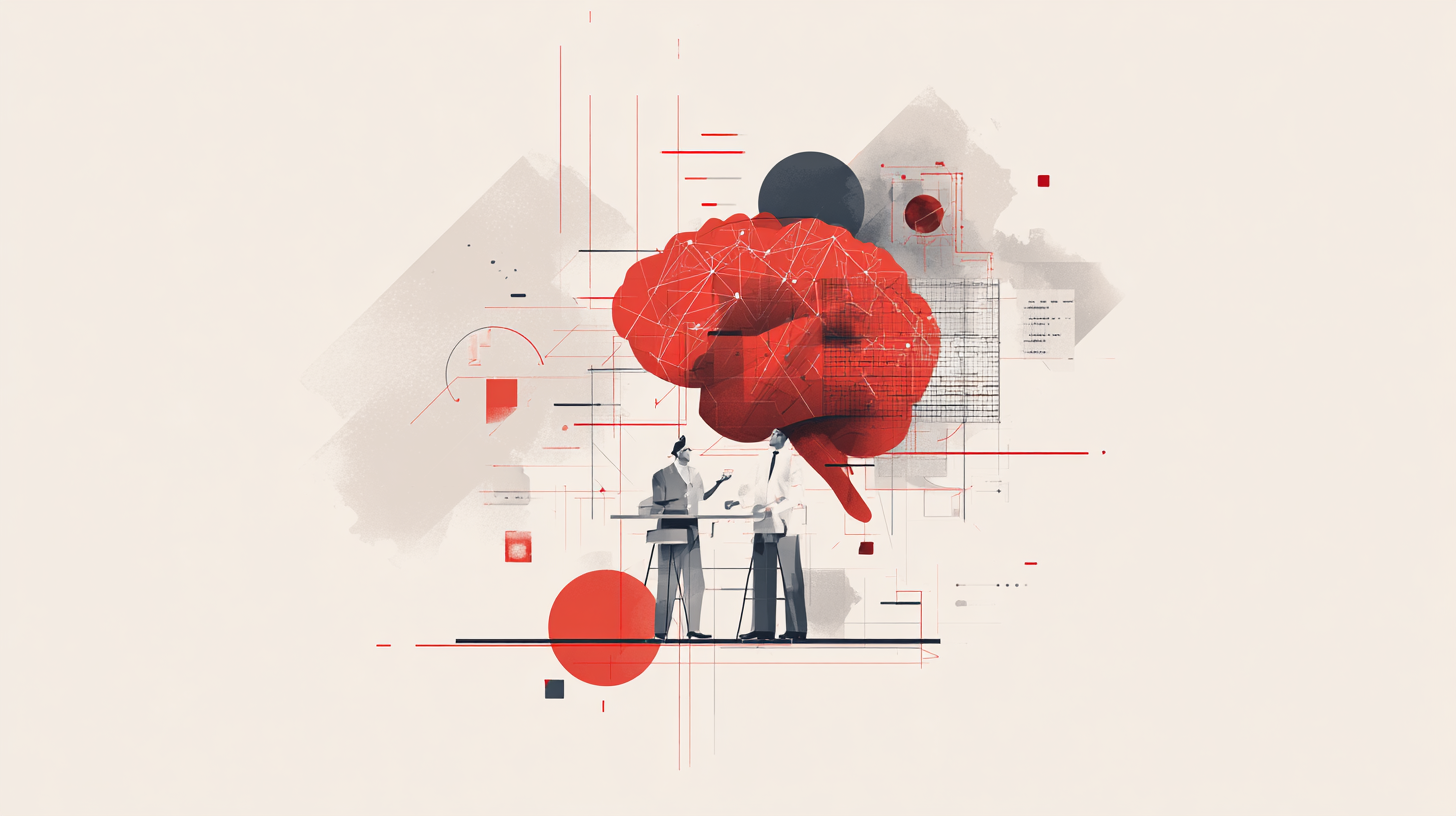
The Future Isn't AI Replacing Humans. It's AI Amplifying Human Intelligence.
Picture this: You walk into a boardroom where every strategic decision is made by algorithms. No human judgment, no contextual understanding, no consideration for company culture or stakeholder relationships. Just cold, calculated AI recommendations executed without question.
Terrifying, right?
Yet this is exactly what many "AI-first" companies are racing toward. They believe the future belongs to fully automated decision-making systems where humans become obsolete.
They're wrong.
The most successful businesses aren't replacing human intelligence with artificial intelligence. They're combining both to create something far more powerful than either could achieve alone. This isn't just a different approach to AI—it's a fundamental reimagining of how intelligent organizations operate.
At Omega Praxis, we call this human-centered AI orchestration, and it's transforming how businesses make strategic decisions. Instead of removing humans from the loop, we've made them the conductors of an AI orchestra, amplifying their wisdom while keeping them firmly in control of every critical decision.
If you're wondering why traditional AI approaches fail so spectacularly, we've covered the complete breakdown of AI agent failures and what businesses can do differently.
How We Got Here: The Evolution of Strategic Intelligence
The journey to collaborative intelligence didn't happen overnight. It's been decades in the making, with each era building on the limitations of the last.
The Manual Era: When Humans Did Everything
Remember the 1980s? Strategic decisions were made in conference rooms filled with printed reports, calculators, and endless spreadsheets. Every piece of analysis was painstakingly crafted by human hands. The process was slow and limited in scope, but it had something that modern AI often lacks: deep human insight and contextual understanding.
Business leaders knew their markets intimately because they had to dig through every piece of data themselves. They understood the nuances, the relationships, the unspoken dynamics that numbers alone couldn't capture. The analysis might have taken weeks, but when decisions were made, they carried the full weight of human wisdom and experience.
The Automation Revolution: When Machines Took Over Data
The 1990s and 2000s brought us traditional business intelligence software, dashboards, and databases. Suddenly, data collection and basic reporting could be automated. Systems could process information faster than any human and present it in clean, consistent formats.
This was revolutionary for its time. Business leaders could see their operations in real-time, track performance metrics, and identify trends that would have taken months to discover manually. But there was a catch: these systems were reactive, not proactive. They could tell you what happened, but they couldn't tell you what to do about it.
More importantly, they created a dangerous separation between decision-makers and their data. Leaders began relying on reports without understanding the underlying dynamics. The human insight that made manual analysis so valuable started to fade.
The AI Analytics Boom: When Algorithms Started Thinking
The 2010s brought machine learning and predictive analytics into the mainstream. AI could now identify patterns humans missed, predict future trends, and even make recommendations. This seemed like the holy grail of strategic intelligence—systems that could not only process data but actually think about it.
And in many ways, it was revolutionary. AI could analyze millions of data points simultaneously, identify subtle correlations, and predict outcomes with impressive accuracy. Businesses that embraced these tools gained significant competitive advantages.
But they also discovered AI's dark side. Algorithms made recommendations that looked brilliant on paper but ignored crucial business realities. They optimized for metrics without understanding context. They made decisions that no experienced business leader would ever approve, simply because they lacked human judgment and wisdom.
The promise of AI-powered decision-making began to feel more like a threat than an opportunity.
The Collaborative Era: When Humans and AI Learned to Dance
Today, we're entering the fourth era of strategic intelligence, and it's fundamentally different from everything that came before. Instead of replacing human decision-makers with AI systems, we're creating collaborative partnerships where both humans and AI contribute their unique strengths.
This isn't about AI doing the thinking while humans rubber-stamp decisions. It's about AI providing comprehensive analysis and insights while humans apply wisdom, context, and judgment to make the final calls. It's about creating systems where human intelligence is amplified, not replaced.
Why Collaboration Beats Automation
The magic happens when you combine what AI does best with what humans do best. It's not about finding the perfect balance—it's about creating synergy where each amplifies the other's strengths.
What AI Brings to the Partnership
AI excels at processing vast amounts of information without getting tired, overwhelmed, or biased by recent experiences. It can analyze millions of data points simultaneously, identify patterns that would take humans months to discover, and maintain consistency across complex analytical frameworks.
Think of AI as the ultimate research assistant—one that never sleeps, never gets distracted, and can hold thousands of variables in its "mind" at once. It can scan market trends, analyze competitor behavior, process customer feedback, and identify opportunities that human analysts might miss simply because there's too much information to process manually.
But AI's greatest strength is also its greatest weakness: it doesn't understand context the way humans do.
What Humans Bring to the Partnership
Humans understand the stories behind the numbers. They know that the quarterly sales dip might be related to the key account manager's departure, not a market trend. They understand that the customer satisfaction scores don't capture the relationship dynamics that could make or break a major deal.
More importantly, humans understand consequences in ways that AI cannot. They know that optimizing for short-term profits might damage long-term relationships. They understand that the most efficient solution on paper might be impossible to implement given the current team dynamics or company culture.
Humans also bring something AI will never have: genuine care about outcomes. When a business leader makes a strategic decision, they're not just optimizing metrics—they're considering the impact on employees, customers, partners, and communities. They're thinking about legacy, values, and the kind of organization they want to build.
The Synergy Effect
When you combine AI's analytical power with human wisdom and judgment, something remarkable happens. Decisions become both more informed and more thoughtful. Strategies become both data-driven and contextually appropriate. Solutions become both efficient and implementable.
This isn't theoretical. We see it every day at Omega Praxis.
Real-World Collaborative Intelligence in Action
Let me show you what this looks like in practice with three examples from our platform.
Strategic Planning That Actually Works
Traditional strategic planning often fails because it's either too data-heavy (lots of analysis, no vision) or too vision-heavy (great ideas, no foundation). Collaborative intelligence solves this by letting AI handle the analytical heavy lifting while humans focus on vision and context.
Here's how it works: AI analyzes market trends, competitive landscapes, and internal performance data to identify opportunities and threats. It can process years of industry data in minutes and identify patterns that would take human analysts weeks to discover.
But then humans take over. They look at the AI's analysis through the lens of company values, team capabilities, and strategic vision. They ask questions like: "Does this opportunity align with who we want to be as a company?" and "Do we have the right people to execute this strategy?" and "What are the unintended consequences we need to consider?"
The result is strategic plans that are both analytically sound and practically implementable—strategies that work in the real world, not just on paper.
Customer Intelligence That Drives Results
Understanding customers is both an art and a science, and collaborative intelligence excels at both.
AI can analyze customer behavior patterns, sentiment data, and purchasing trends to identify what customers are doing and how they're feeling. It can segment audiences, predict churn risk, and identify upselling opportunities with remarkable accuracy.
But humans understand why customers behave the way they do. They can interpret the emotional context behind the data, understand the relationship dynamics that drive loyalty, and craft communication strategies that resonate on a human level.
When you combine AI's analytical insights with human empathy and relationship understanding, you get customer strategies that are both data-driven and emotionally intelligent. You understand not just what customers are doing, but why they're doing it and how to respond in ways that strengthen relationships rather than just optimize metrics.
Operational Excellence That People Actually Want
Operational optimization is where the collaboration between human and AI intelligence becomes most critical. AI can identify inefficiencies, suggest process improvements, and predict the impact of changes with impressive precision.
But humans understand the human side of operations. They know that the most efficient process on paper might be impossible to implement given current team dynamics. They understand that change management is just as important as process design. They can anticipate resistance, identify training needs, and design implementation plans that actually work.
The result is operational improvements that not only boost performance but also maintain team morale and company culture. Changes that people want to embrace, not resist.
How Omega Praxis Makes Collaborative Intelligence Real
Building a platform that truly enables human-AI collaboration isn't just about connecting people to AI tools. It requires rethinking how humans and AI interact, how decisions get made, and how intelligence flows through an organization.
We've spent years developing what we believe is the first platform that makes collaborative intelligence practical and powerful for real businesses.
Your Personal AI Advisory Board
Imagine having access to 32 specialized business experts, each with deep domain expertise, available for consultation 24/7. That's exactly what we've built with our AI personas system.
Instead of one generic AI that claims to know everything about business, you get specialized consultants for every domain: a marketing strategist who understands customer psychology, a financial analyst who can model complex scenarios, an operations expert who thinks about efficiency and scalability, a brand strategist who understands positioning and differentiation.
Each persona brings deep, specialized knowledge to your specific challenges. When you're developing a go-to-market strategy, you're not getting generic advice from a general-purpose AI. You're getting insights from an AI that's been trained specifically on marketing strategy, customer acquisition, and market positioning.
Want to meet your entire AI consultation team? Learn about all 32+ specialized business experts and how they can transform your decision-making process.
Intelligence That Never Goes Down
We've also solved one of the biggest problems with AI-powered systems: reliability. Instead of depending on a single AI provider (and hoping they never have outages), we orchestrate intelligence across six major AI providers.
When ChatGPT goes down, your strategic intelligence keeps flowing. When one provider is overloaded, your analysis automatically routes to another. You get the best capabilities from each provider for each specific task, with automatic failover that ensures your business intelligence never stops.
This isn't just about reliability—it's about performance. Different AI models excel at different tasks. Some are better at creative thinking, others at analytical reasoning. Some handle large documents better, others excel at real-time research. Our platform automatically routes each task to the AI that's best suited for it.
Human Oversight That Actually Works
The most critical innovation is our human validation system. Every AI recommendation goes through human review before it affects your business. But this isn't just a rubber-stamp process—it's designed to enhance human decision-making.
When AI provides analysis or recommendations, you see not just the conclusions but the reasoning behind them. You can dig into the assumptions, challenge the logic, and apply your own business context and judgment. The AI becomes a powerful advisor, but you remain the decision-maker.
This creates something unique: AI-enhanced human intelligence rather than AI-replaced human intelligence. You get all the analytical power of AI with all the wisdom and judgment of human experience.
This human-in-the-loop approach is why your brain remains the best CEO even in an AI-powered world. Human judgment, context, and wisdom remain irreplaceable in strategic decision-making.
From Consultation to Implementation
Perhaps most importantly, we've created a seamless flow from AI consultation to strategic implementation. You can start with a conversation with one of our specialized AI consultants, develop that into a comprehensive analysis using our strategic frameworks, validate and refine the recommendations based on your business context, and then move directly into implementation planning.
This systematic approach is what we call the Chain of Validated Intelligence—a proven process that transforms initial ideas into executable strategies through AI consultation and human validation.
It's not just about getting better AI responses—it's about transforming how your entire organization thinks about and makes strategic decisions.
The Strategic Advantage of Getting This Right
The businesses that master collaborative intelligence don't just perform better—they develop sustainable competitive advantages that are difficult for competitors to replicate.
Speed Meets Wisdom
Traditional strategic intelligence forces you to choose between speed and quality. You can get fast answers from AI, but they might lack context or judgment. You can get thoughtful analysis from human experts, but it takes time.
Collaborative intelligence gives you both. AI provides rapid analysis and comprehensive insights, while human validation ensures quality and appropriateness. The result is fast decisions that are also good decisions—strategic choices that are both timely and wise.
This speed advantage compounds over time. While competitors are still gathering data or waiting for consultant reports, you're already implementing strategies based on AI-enhanced human intelligence.
Scale Without Losing Your Soul
One of the biggest challenges in business growth is maintaining what made you successful in the first place. As companies scale, they often lose the personal touch, the cultural values, and the relationship focus that drove their early success.
Collaborative intelligence solves this by letting AI handle increasing complexity and volume while human oversight maintains business context and relationships. You can grow without losing what makes you special.
AI can process thousands of customer interactions, but humans ensure that your response strategy aligns with your values and strengthens relationships. AI can optimize operations for efficiency, but humans make sure the changes support your culture and employee satisfaction.
The Trust Advantage
Perhaps most importantly, collaborative intelligence builds trust in ways that pure AI cannot. When stakeholders know that humans are actively involved in every strategic decision, they have confidence in the outcomes. When employees see that AI is enhancing rather than replacing human judgment, they embrace the technology rather than resist it.
This trust advantage extends to customers, partners, investors, and regulators. Everyone feels more comfortable with AI-enhanced human decisions than with purely automated ones. This comfort translates into stronger relationships, better partnerships, and more successful implementations.
Your Collaborative Intelligence Journey Starts Here
The future of strategic intelligence isn't coming—it's here. Organizations around the world are already using collaborative intelligence to transform their operations, accelerate their growth, and build sustainable competitive advantages.
The question isn't whether this transformation will happen—it's whether you'll lead it or follow it. The businesses that embrace collaborative intelligence first will establish competitive advantages that become increasingly difficult to replicate.
At Omega Praxis, we've built the platform that makes this transformation practical and powerful. We've proven the model with businesses across dozens of industries, and we've seen firsthand how collaborative intelligence transforms not just business performance, but how organizations think, decide, and operate.
Your collaborative intelligence journey starts with a single decision: Are you ready to amplify your human wisdom with AI capabilities?
See Collaborative Intelligence in Action → - Discover three real transformation stories showing exactly how businesses have achieved remarkable results through human-AI partnership.